Getting started · 4 min read
Do you need to be flexible to start yoga? Here is the truth
Yayso Yoga · September 29, 2026
No, you do not need to be flexible to start yoga. Flexibility is one of the things yoga helps you build, not an entry requirement. Beginners start with the body they have, using bent knees, support and gentler versions of each pose, and they improve by practicing.
Still, “I’m not flexible enough” is one of the most common reasons people give for never trying a class. Let’s look at where that idea comes from and what actually happens when a stiff beginner walks in.
Why do so many people think yoga requires flexibility?
Mostly because of photos. Yoga on social media tends to show deep backbends and legs behind heads, performed by people who have practiced for years.
Those pictures show where some people end up, not where anyone starts. Saying you are too stiff for yoga is a bit like saying you are too out of breath to start walking. The practice is how the change happens.
What if I can’t touch my toes?
Then you are in very good company. Many beginners cannot, and plenty of long-time students still cannot either.
In a well-taught class, you will be offered versions of each pose that meet you where you are:
- Bent knees in forward folds, so your back stays comfortable.
- Support from a wall, a block, a strap or, in aerial yoga, the hammock itself.
- Smaller ranges of motion, going only as far as feels like a stretch and not a strain.
- Rest whenever you need it, without explanation.
The goal of a pose is not to look like the picture. It is to feel the stretch in the right place while breathing steadily.
Does yoga make you more flexible?
Many people find that regular practice gradually improves how easily they move. Stretching done consistently, a little at a time, is often more useful than occasional big efforts.
How quickly that happens varies a lot. Age, past injuries, daily habits and how often you come to class all play a part. Try not to measure progress only by how far you can reach. Many beginners first notice things like turning their head more easily when driving, or getting up off the floor with less effort.
What matters more than flexibility when you start?
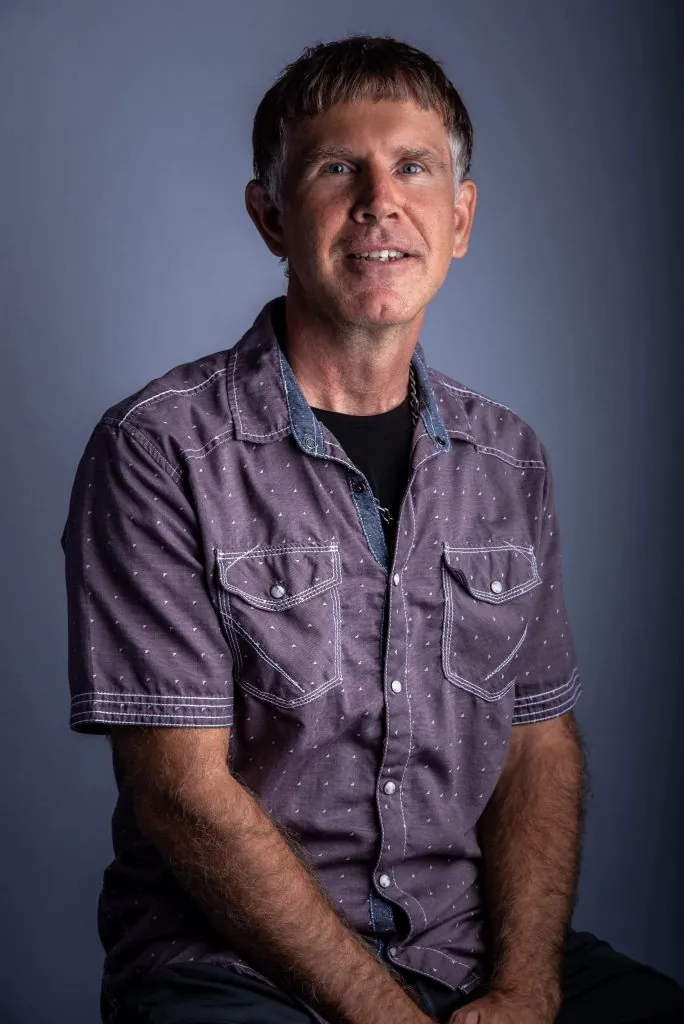
Honestly, attitude. David Gallaher, who owns Yayso Yoga and teaches nearly every class himself, puts it this way: “anyone can do yoga with the right instructor, patience, and a great attitude.”
That quote names three things, and none of them is flexibility. The right instructor adjusts the class to you. Patience means letting your body change at its own pace. A great attitude means showing up curious rather than judging yourself against the person on the next mat.
David has taught body mechanics and dynamic stretching to youth and adults for over 25 years. He has studied a variety of yoga styles on his travels, and Yayso’s base is hatha yoga using the eight-limbs system of Ashtanga. In plain terms, that is a steady, foundational style that suits beginners well.
Is aerial yoga a good choice if I’m stiff?
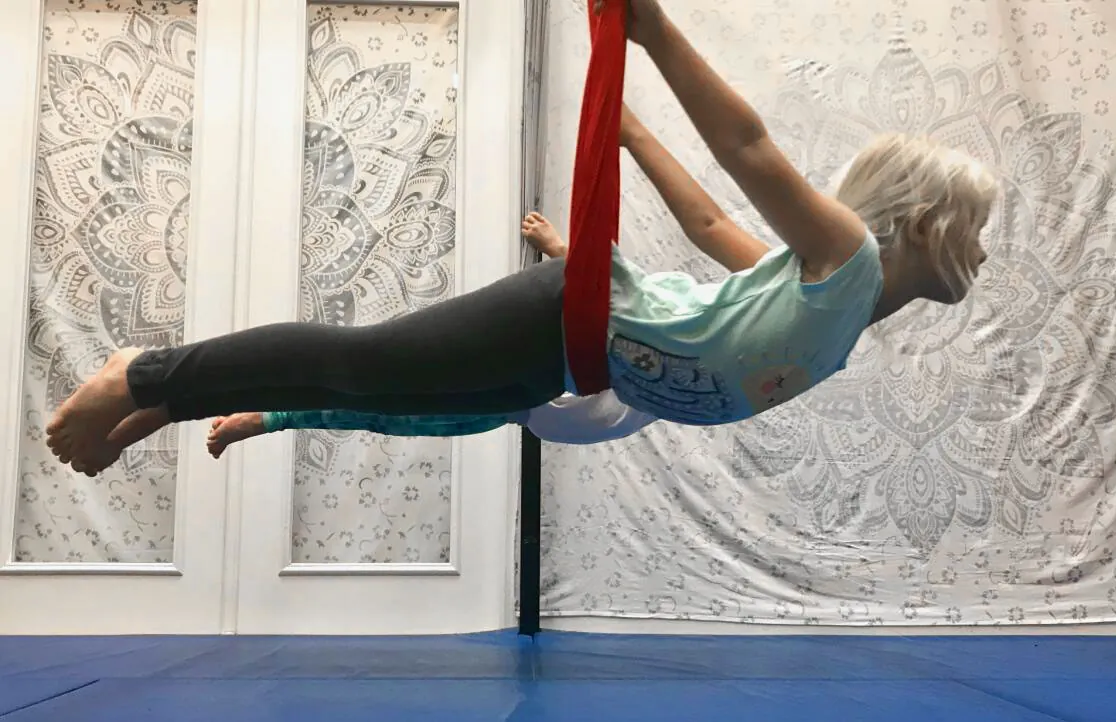
It can be a surprisingly good one. In aerial yoga, a soft fabric hammock hangs from the ceiling and holds part of your weight.
That support means you can lean into a stretch gradually instead of forcing it. Many people find their hips and hamstrings open more comfortably when the fabric is doing some of the work. Yayso’s aerial classes focus on suspended stretching and foundational strength, and every inversion is optional.
If aerial yoga sounds appealing but a little intimidating, read what to expect at your first aerial yoga class and whether aerial yoga is safe for beginners.
What about assisted stretching?
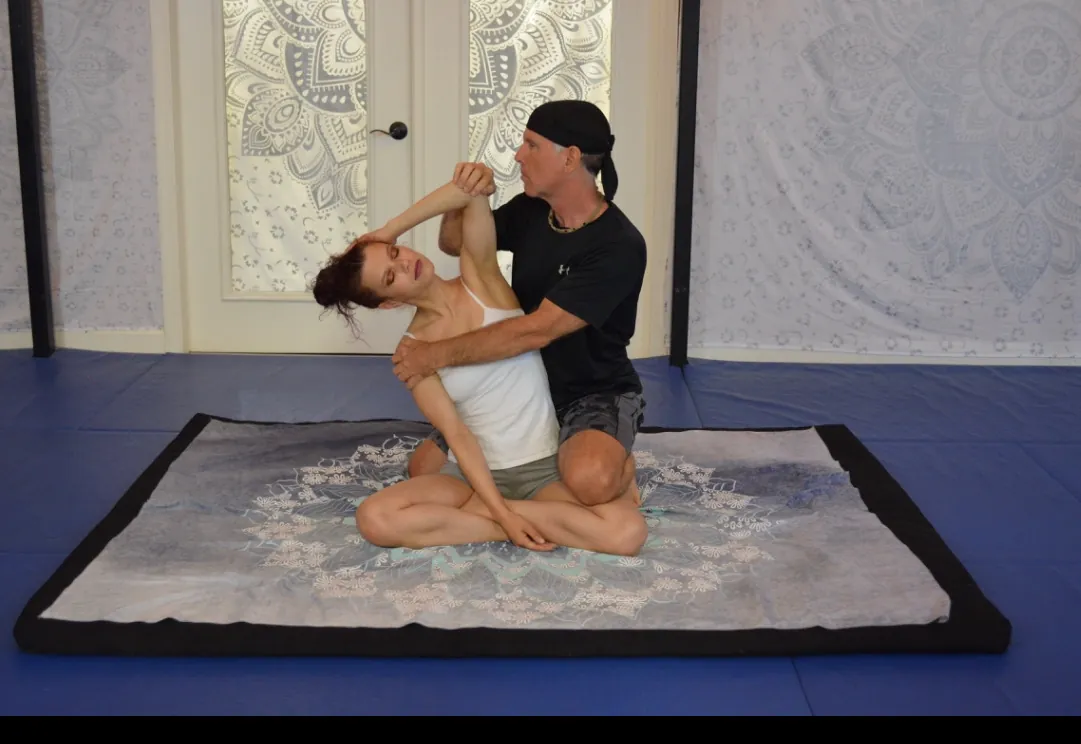
If you would rather be stretched than stretch yourself, Thai yoga bodywork is worth knowing about. You lie or sit fully clothed on a mat while the practitioner moves you through assisted stretches.
It is a quiet, one-on-one alternative for people who want to feel how their body can move without having to lead the way themselves. Read more in What is Thai yoga bodywork?
How should an inflexible beginner prepare for a first class?
Keep it simple:
- Arrive a few minutes early.
- Tell your instructor about any injuries or tight spots.
- Wear comfortable clothes you can move in.
- Go only as far as feels like a stretch, never pain.
- Remember that every inversion and every advanced option is optional.
Start where you are at Yayso Yoga
Yayso Yoga is in South Fort Myers, just off Alico Road, and its beginner classes are built for people who feel stiff, unsure or out of practice. Any first class is a $25 drop-in with no membership required. See what to expect and book your first class, or read more about David.
Quick answers
In
short
Can I do yoga if I cannot touch my toes?
Yes. Plenty of people start yoga unable to touch their toes. Poses can be done with bent knees, props, or support, and a good instructor will show you a version that works for your body today.
Is aerial yoga easier for inflexible beginners?
Many people find it helps. The hammock takes some of your body weight, so you can ease into stretches with less strain than on the floor alone.
How long does it take to get more flexible with yoga?
It varies from person to person and depends on how often you practice. Many people notice small changes within a few weeks of regular classes. Consistency matters more than intensity.